
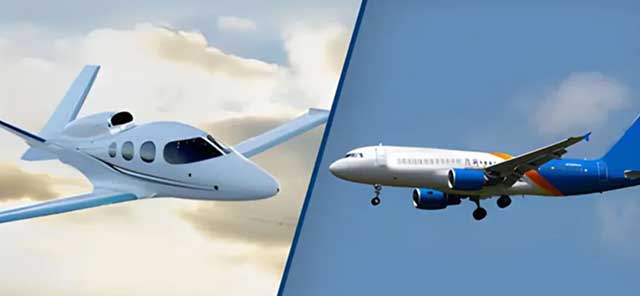
Aircraft operations vary significantly in size, structure, regulatory oversight, and available resources. A large commercial air transport organisation may have dedicated departments responsible for continuing airworthiness, maintenance control, maintenance planning, engineering support, quality assurance, and contracted or internal maintenance delivery.
In comparison, many light aircraft operations — whether commercial or private — are managed with much smaller teams. In many cases, the aircraft owner is also the aircraft operator, and the same person or small team may be responsible for aircraft scheduling, maintenance coordination, compliance visibility, record keeping, defect follow-up, component tracking, and communication with the maintenance provider.
The regulatory obligations may differ between operation types and jurisdictions, but the practical requirement remains the same: aircraft maintenance must be understood, planned, recorded, and completed in a way that can be verified.
Large commercial operations are built around specialist oversight roles
Large commercial air transport operations generally operate with a formal continuing airworthiness structure. In many regulatory environments, a Continuing Airworthiness Management Organisation, or CAMO, is responsible for ensuring that aircraft remain compliant with applicable continuing airworthiness requirements.
In these operations, the aircraft owner is not always the aircraft operator. Responsibility for ensuring regulatory obligations are met may be formally delegated to an approved organisation or managed through defined internal departments and contracts.
A maintenance controller commonly ensures that required maintenance is carried out by the maintenance provider at the correct time and in accordance with approved requirements. This role may be supported by maintenance planners who coordinate scheduled maintenance, forecast upcoming inspections, monitor utilisation, manage downtime windows, and align aircraft availability with operational demand.
Maintenance providers in large operations may be a subsidiary of the parent company, an internal maintenance organisation, or a large external MRO with extensive technical capability, tooling, personnel, stores, engineering support, and quality systems.
This structure gives large operators access to significant resources, but it also brings significant overhead. The organisation must support specialist personnel, internal systems, compliance processes, documentation workflows, planning controls, technical records, and quality assurance functions.
Light aircraft operators often absorb multiple oversight responsibilities
Light aircraft operations are typically very different. In many private, training, charter, scenic, agricultural, utility, or small commercial operations, the aircraft owner is often also the operator. Even where a small organisation operates several aircraft, the number of people available to manage maintenance oversight may be limited.
These operators may not have a dedicated CAMO, a full-time maintenance controller, or maintenance planners. Some larger light aircraft operators may appoint a maintenance controller or technical person to coordinate maintenance activity, but this is not always practical or proportionate for smaller operations.
The maintenance provider is also more often a third-party organisation rather than an internal department or subsidiary. This means the operator must maintain enough visibility to understand what is due, what has been completed, what is deferred, and what evidence exists to prove conformance.
In practical terms, the light aircraft operator often absorbs many of the responsibilities that would otherwise be separated across a CAMO, maintenance controller, technical records team, and maintenance planning department in a larger operation.

Smaller operations do not always mean simpler maintenance oversight
It can be easy to assume that light aircraft maintenance oversight is simple because the aircraft are smaller or the operation is less complex than a large commercial air transport fleet. In reality, the oversight challenge can still be significant.
A light aircraft may still have recurring inspections, calendar limits, utilisation-based tasks, life-limited components, engine and propeller requirements, avionics requirements, airworthiness directives, service bulletins, role equipment, modifications, defects, deferred items, and historical maintenance records that must be retained and understood.
The difference is that smaller operators often need to manage these requirements without the same specialist departments that exist in larger organisations.
This is where the choice of maintenance tracking system becomes especially important. The right tool can help reduce the administrative gap between large-operator resources and light-aircraft operator obligations.
The maintenance tracking requirement is different for each operating model
Large commercial operators often need systems that support complex fleet planning, multiple departments, heavy maintenance events, reliability programmes, engineering workflows, and high-volume technical records.
Light aircraft operators generally need something different: a system that provides clear aircraft status, practical maintenance forecasting, simple component tracking, reliable task history, defect visibility, work order traceability, and easy access to evidence of conformance without requiring large administrative overhead.
The system must be powerful enough to support compliance and maintenance planning, but practical enough for a small operator to use consistently.
If a system is too complex, it may become another administrative burden. If it is too basic, it may not provide enough structure to support ongoing maintenance oversight. The goal is to provide the operator with the right level of control without recreating the overhead of a large commercial organisation.
The operator needs tools that reduce the all-in-one burden
When a light aircraft operator is effectively acting as the aircraft owner, operator, maintenance coordinator, records reviewer, planner, and compliance monitor, the right maintenance tracking tool becomes essential.
A dedicated aircraft maintenance tracking system can help operators:
- View current aircraft maintenance status
- Track last done and next due requirements
- Forecast upcoming maintenance
- Monitor aircraft and component utilisation
- Record defects and deferred items
- Maintain component installation history
- Store supporting maintenance records
- Track work orders, work packs, and task completion
- Verify release-to-service and approval information
- Find historical records quickly when required
These capabilities are not only administrative conveniences. They help the operator maintain better visibility over obligations that would otherwise be spread across paper records, spreadsheets, emails, maintenance provider documents, and individual knowledge.
Reducing paperwork without reducing oversight
A common challenge for smaller operators is finding a way to reduce paperwork without reducing control. Paper records and spreadsheets may appear simple, but they often create hidden workload when information needs to be found, verified, updated, or cross-checked.
Digital maintenance tracking helps by turning maintenance information into structured, searchable data. Instead of relying on manual reviews of binders, folders, or disconnected spreadsheets, operators can access aircraft status, task history, component records, and supporting evidence from a single system.
This can reduce time spent searching for records, improve confidence in maintenance status, and make it easier to prepare for audits, inspections, maintenance reviews, or aircraft transitions.
Audit trails and conformance evidence matter at every scale
Regardless of aircraft size, operators need to be able to demonstrate that required maintenance has been completed and that records support the aircraft’s continuing airworthiness position.
For a large commercial operation, this evidence may be managed by technical records staff, planners, maintenance control, quality departments, and continuing airworthiness specialists.
For a light aircraft operator, the same need to prove conformance may still exist, but the resources available to manage the evidence are often far smaller.
Trails AMS is designed to help bridge that gap by providing structured audit trails, maintenance task history, component tracking, work order visibility, and release-to-service support in a system intended for practical aircraft maintenance oversight.
Trails AMS supports practical oversight for smaller operators
Trails AMS is built to help aircraft operators manage maintenance requirements without needing the scale or administrative structure of a large commercial air transport organisation.
It gives operators a way to configure aircraft maintenance requirements, track ongoing status, collaborate with maintenance providers, maintain historical records, and improve visibility over aircraft conformance.
For light aircraft operators, this can provide some of the structure normally associated with larger oversight models, while remaining practical for smaller teams and owner-operator environments.
The goal is not to replace the technical expertise of maintenance providers, engineers, or regulatory specialists. The goal is to give operators the tools to organise that information, track it correctly, and prove conformance when required.
The right system reduces overhead instead of adding it
Light aircraft operators already carry a broad range of responsibilities. Adding another system should not create unnecessary complexity. The value of a maintenance tracking platform comes from reducing repetitive administration, improving visibility, and making maintenance information easier to trust.
When aircraft requirements are configured correctly, ongoing tracking becomes easier. Operators can spend less time searching through records and more time maintaining confidence that aircraft maintenance is being monitored, planned, and completed as required.
In large commercial operations, oversight responsibilities are distributed across departments. In light aircraft operations, those responsibilities often sit with a much smaller group of people. Trails AMS is designed to support that reality.
With the right tools, smaller operators can improve maintenance oversight, reduce paperwork, strengthen audit trails, and prove historical conformance without taking on the overhead of a large commercial operation.